The process
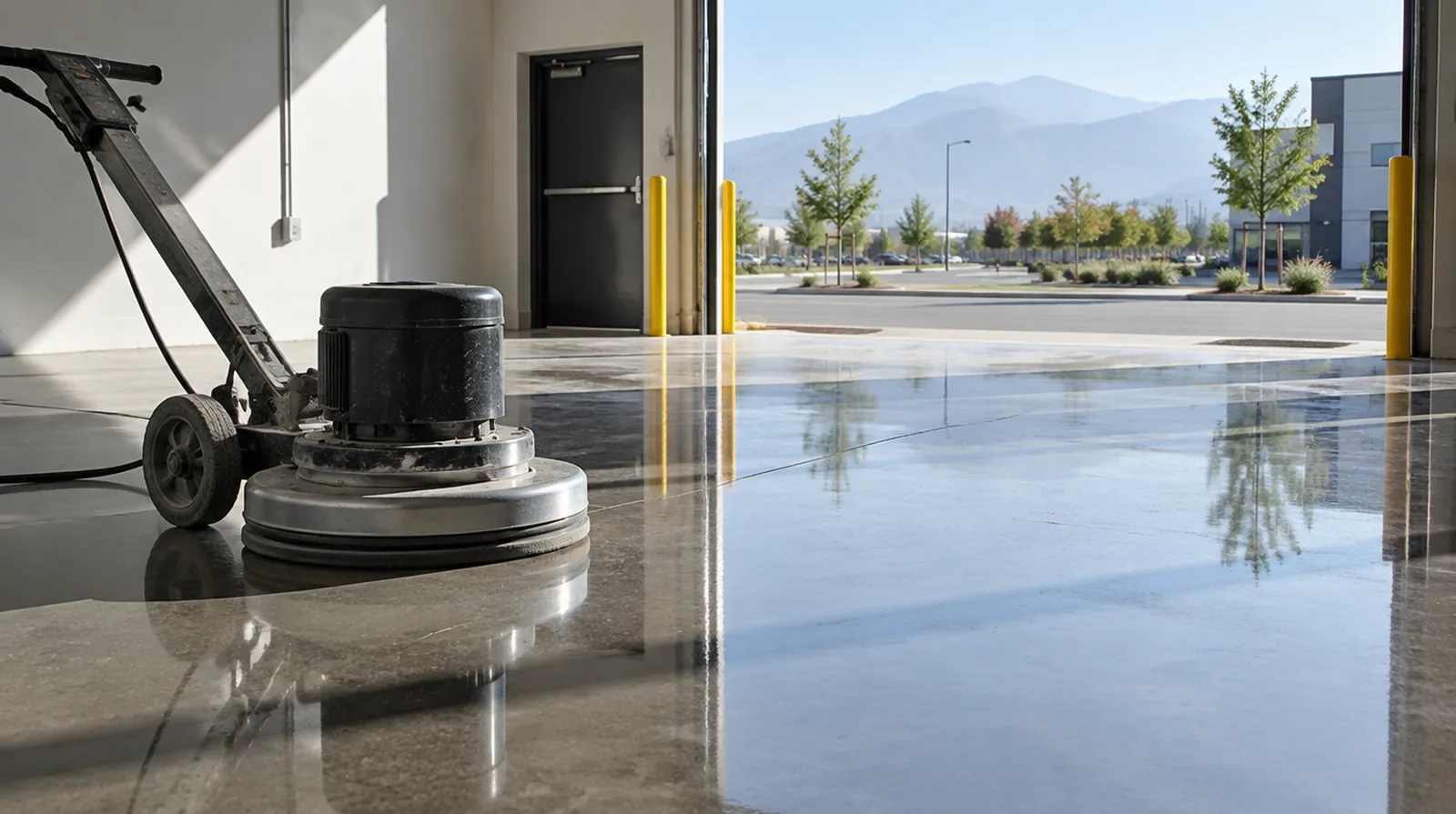
We grind the slab in steps using finer diamonds each time. A densifier soaks into the concrete and hardens it. Then we polish it to the sheen you choose, from flat to high gloss, and add a stain guard.
Benefits
- No peeling or yellowing
- Low maintenance
- Reflects light, which can brighten a room
Not right for every slab
Polishing does not hide cracks, patches or stains. If your floor has a lot of damage, we will recommend a coating instead.
How long does polishing take?
A small space can be done in a day or two; large commercial floors take longer.
Will it stain?
The guard helps, but spills like oil should be wiped promptly.
Where polished concrete makes sense in Eastvale
Showrooms, gyms, offices and retail units near the Eastvale Gateway area are good candidates, since polished floors hold up to foot traffic and need little upkeep. At home, it can work in a converted garage or a covered patio room. It is a smart choice if you do not want to recoat a floor down the road.
Upkeep
Dust mop daily in a business, and clean with a pH-neutral cleaner. Avoid acidic cleaners, which can dull the shine.
Polished concrete for Eastvale's modern spaces
Polished concrete fits the contemporary look of many Eastvale commercial buildings and some newer homes. It is durable, easy to clean and has no coating to peel. In warehouses and retail spaces it also reflects light, which can brighten a large room.
Questions about polished concrete
Can it be done in an occupied home? Yes, with dust control and planning.
Will cracks show? Yes, though we can fill them with a matching filler.
What finish levels are available? From matte to high gloss.
Is it good for a garage? On a clean slab, yes. Oil-stained areas may stay darker.
Why it suits warehouses
Polished floors handle forklifts well, do not need recoating and clean up with an auto scrubber, which keeps long-term costs low.
Steps in a polish
We grind with coarse diamonds, fill cracks, apply a densifier, then refine with finer pads until we reach the sheen you want. A stain guard finishes the floor, and dust is captured by vacuums the whole time.
Keeping the sheen during windy weeks
Dust-mop daily during windy weeks, and wash with a neutral cleaner.
Polished floors for studios, gyms and shopping center suites
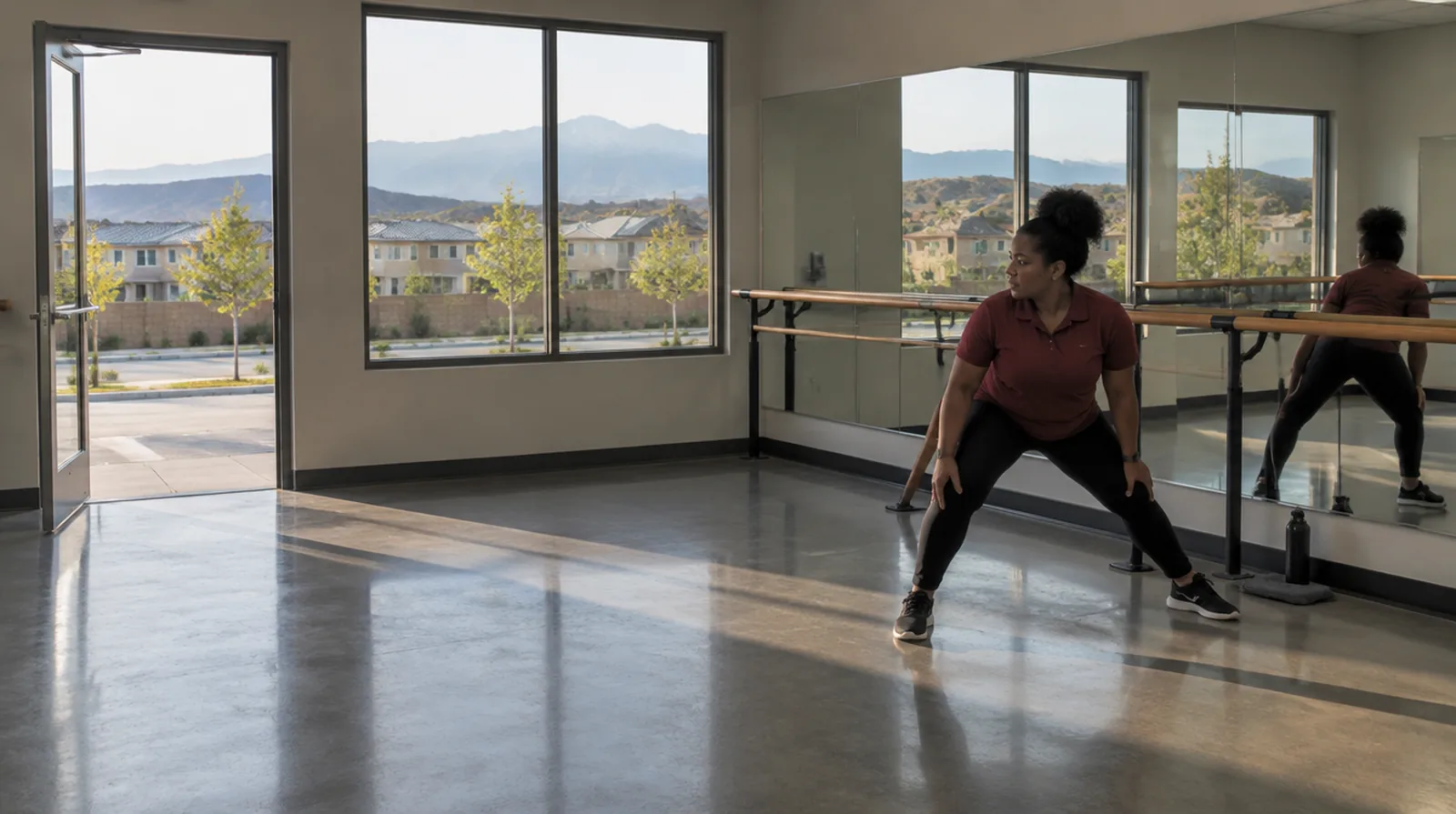
Eastvale has added a lot of retail and service space over the past decade, and many of those suites are leased with bare concrete for the tenant to finish. Dance studios, martial arts schools, boutique gyms, salons and small cafés often choose polished concrete because it gives a clean, modern floor straight from the slab that is already there.
Dance and movement studios
For studios where people move barefoot or in soft shoes, we usually stop the polish at a satin level rather than a mirror shine. That leaves enough grip for turns and stretches while still looking finished. Many studio owners lay a sprung floor or a marley surface over part of the room and leave the polished concrete exposed in lobbies, changing areas and hallways.
Gyms and training floors
Weight rooms often put rubber matting over the heavy-lift zones and leave polished concrete in the walkways and cardio areas. The densified surface holds up to rolling equipment and is quick to clean at closing time.
Working with a tenant build-out
In a new lease, timing matters. Polishing is best done before walls are painted and fixtures go in, because grinding throws off fine slurry and needs open floor space. We coordinate with your contractor or landlord so the floor work slots in between framing and finishes.
Old saw cuts and patched spots
Retail slabs often carry saw cuts, anchor holes and patches from previous tenants. We fill and grind them so they blend in as well as possible, and we explain on the walk-through which marks will still show in the finished floor.
Can a polished floor have our brand color? Yes. A tinted dye can add color before the final polish steps.
Ask about polished concrete
Call (951) 330-3293 for an estimate.